

To err is human. But a pricing mistake in ecommerce can cost more than just a facepalm. It can quietly drain profits, confuse customers, or worse, hand your competition the upper hand in a business climate where buyers are savvy and margins are razor-thin. In this post, we'll spotlight six common pricing mistakes that ecommerce brands often make and how you can sidestep them before they chip away at customer trust and your bottom line.
Slashing prices repeatedly to stay competitive can seem like a power move. But it's often the onset of a dangerous race to the bottom. Price wars might win you the battle, but they'll cost you the war (and your profit margins along with it). If your store's only value proposition is "we're cheaper," someone will always come along and undercut you.
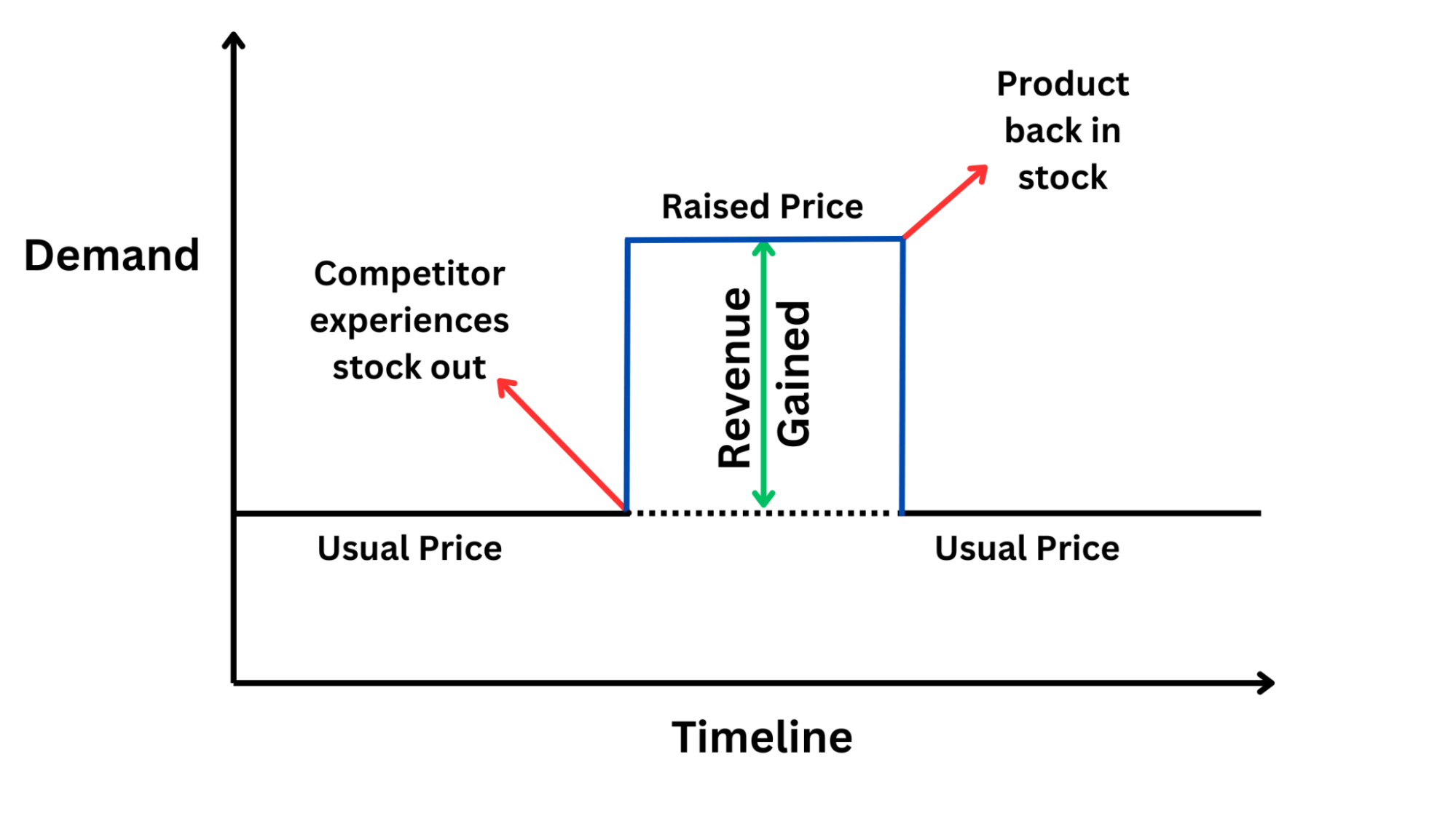
The smarter move? Your prices should reflect the realities behind the doors of your competitor's storefront. Are they sitting on excess inventory? Running limited-time promos? Out of stock on high-demand items? For instance, if they're out of stock on a trending item, that's your window to raise your price slightly and capture demand and additional revenue while they scramble to restock.
Pricing intelligence tools can flag such inventory gaps in your competitor's catalog. When they sell out a monitored product, you're the first to know and act by raising your own prices.
Here is an image representing this scenario:
A real-life example of this mistake could be the price war between Jet.com and Amazon that didn't end well for the former. Jet.com tried to undercut Amazon on virtually every product and burned through $500M+ in capital before being acquired by Walmart. Despite the buzz, Walmart shut Jet.com down in 2020 due to unsustainable losses.
Some sellers keep their prices fixed while everything around them changes. Demands shift, flash sales pass by, seasons change, supply chains tighten… But their prices? Still stuck in the first gear.
Static pricing is a silent revenue killer. The prices that worked last quarter might be totally off this week. If it doesn't reflect real-time competitor pricing, you're missing out on critical opportunities.
Smart brands treat pricing as a live strategy. They adjust for high-demand items. They make constant changes for slow-moving inventory. And if there is a sudden price drop during a sale, they will instantly capitalize on it.
Amazon, for instance, changes prices as frequently as every 10 minutes. Why? Because they know that today's shoppers are price-sensitive. Even a minor fluctuation can sway their purchasing decision.
Some brands jump into a pricing strategy simply because it worked for others, without stopping to ask, "Is this us?". There is one big problem with this approach. What works for one brand can completely flop for another.
If your pricing strategy doesn't match what your customers expect or how your brand is positioned, it creates confusion. Shoppers feel disconnected. And your sales take a nosedive!
A classic example of this mistake would be the one made by JCPenney. For years, this popular retail chain thrived on a discount-driven model. It attracted deal-seeking shoppers with coupons and promotional offers. But in a dramatic shift, the brand scrapped all discounts in favor of a "fair and square" everyday low pricing strategy.
The move confused and alienated its loyal customer base. After all, they had come to expect regular markdowns. Unable to connect with its core audience, JCPenney saw a sharp decline in sales and brand loyalty.
Not all shoppers are the same. Some are first-time browsers, some loyal repeat buyers, while others are price-sensitive deal hunters. If you're offering the same prices to everyone, you're missing out on massive revenue opportunities.
Segmenting (or "bucketing") your customers based on aspects like behavior or purchase history allows you to set prices that actually resonate. You will experience improved conversions and profitable customer relationships by adopting this technique.
For example, you could segment by purchase history and offer exclusive pricing to "repeat buyers" and coupon discounts to convert "first-time visitors".
Never assume that your customers will pay whatever you charge. Every audience has a tipping point. You just don't know where it is. This blind spot can lead to either overpricing yourself out of the market or underpricing and leaving profits behind.
Price sensitivity analysis is the key to solving this challenge. The idea is simple: test different price points and observe how they impact conversion rates or cart abandonment. A simple formula to calculate price sensitivity is:

For instance,
You sell earbuds for $50.
You manage to sell 1,000 units per month.
You decide to lower the price to $45
The sales increase to 1,300 units per month.
Price sensitivity comes out to (1300-1000)/(45-50) = - 60.
Here,
Negative sign indicates that as price decreases, demand increases.
A higher absolute value (like 60) means your customers are very price sensitive. In other words, small changes in price can lead to big changes in quantity sold.
Such a data-driven approach will help you uncover your customers' willingness to pay. You can use it to change prices confidently and generate sales that guesswork will never be able to.
There's no faster way to lose a sale than surprising your customer at the very last second. Handling charges or taxes that magically appear during checkout are often a key reason for carts to get abandoned. Modern shoppers want utmost transparency. Not a checkout ambush.
For instance, in the below checkout summary, two additional components have been suddenly added out of nowhere, increasing the price of the product by $49 from the value shown in the cart. This can frustrate some, triggering them to bounce.
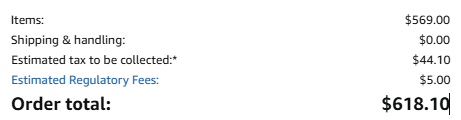
Whether it's shipping costs, taxes, or any other fee, show it early and clearly. The more honest and friction-free your checkout experience is, the more likely customers are to complete the purchase. For starters, you could try using all-inclusive pricing right from the product page. You could also display a shipping calculator at the product detail page.
Competitor prices can change dozens of times a day. If you're still comparing competitor prices manually, you're not just behind, you're vulnerable. By the time you spotted a competitor's drop and updated your price, they've already made their next move.
Manual pricing also opens the door to costly errors. You might undercut too much and hurt your margins, or not react at all and lose sales to smarter, faster rivals.
Automated pricing tools are no longer a nice-to-have; they're a competitive necessity. They monitor your competitors' pricing in real time and track inventory levels so that you can adjust your prices dynamically.
Avoiding the above pricing mistakes isn't just about protecting your margins. It's about building trust and driving long-term growth. In a market driven by data and speed, relying on gut instinct for pricing decisions just won't cut it.
That's where a price intelligence platform like Anakin can make all the difference. Our pricing tech accurately tracks competitor prices in real time and shares valuable insights with you.
Beyond just price points, Anakin captures persona-specific pricing differences. From capturing details such as how long-term customers are charged compared to new users, or how prices vary between mobile app and website experiences, we help you uncover hidden pricing tactics that competitors don't advertise broadly. With this depth of intelligence, you can price with confidence and real-world context.
Want to know more about Anakin's capabilities? Book a demo now.
Written by Anakin Team