

Today, more companies see data not just as a tool but as a strategic asset. In particular, open access to public web data is sparking breakthroughs in research, product development, and competitive strategy. Businesses of any size can now tap into these vast data resources, helping them keep pace with larger competitors. It also drives innovation across diverse sectors, including e-commerce, finance, healthcare, and education. By making data accessible to a broad audience, organizations can uncover hidden patterns, respond faster to market shifts, and optimize their decision-making processes. This article delves into the concept of democratizing data, highlights its growing importance, and shows how public web data unlocks continuous innovation for both emerging and established players.
Democratizing data involves tearing down the barriers that once kept vital information in the hands of a privileged few. This process historically required expensive subscriptions, proprietary databases, or internal analytics teams. Today, new platforms, open-source tools, and community-driven resources have made it feasible for startups, academic researchers, and even small community groups to harness data insights. When data is shared and easily accessible:
Over time, these collective efforts level the playing field, encouraging competition based on ingenuity rather than resource heft.
Public web data comprises free, openly available information from websites, social platforms, and online directories. This can include product listings, consumer reviews, or market indicators updated in real time. Such data is invaluable for several reasons:
The global reach of the web means there's almost no industry left untouched by publicly available data. For instance, a boutique electronics firm might track social media chatter about new technology trends, while an agricultural cooperative might monitor real-time weather data to optimize planting schedules. This breadth of application amplifies the importance of democratizing data, as more sectors benefit from inclusive information access.
Startups and small businesses can now access the same raw data once limited to major corporations, encouraging greater market competition.
When everyone operates with a consistent data set, discussions shift from hunting for information to interpreting it. This alignment boosts collaboration and speeds up action.
Public web data often replaces expensive proprietary resources, reducing overhead and allowing organizations to reallocate budgets toward product development, marketing, or talent acquisition.
By exploring large datasets, teams discover unconventional correlations, new customer segments, and product gaps, opportunities that might stay hidden without data-driven methods.
Web scraping tools automate the process of gathering large volumes of public data and structuring it in a usable format. Platforms like Anakin streamline this activity by offering accurate and reliable data tailored to the needs of the client. The benefits of leveraging such tools and platforms include:
These tools have become more sophisticated, incorporating machine learning to adapt when website structures change. Responsible usage also matters. Teams should abide by site policies, legal regulations, and data protection standards to maintain public trust and institutional credibility.
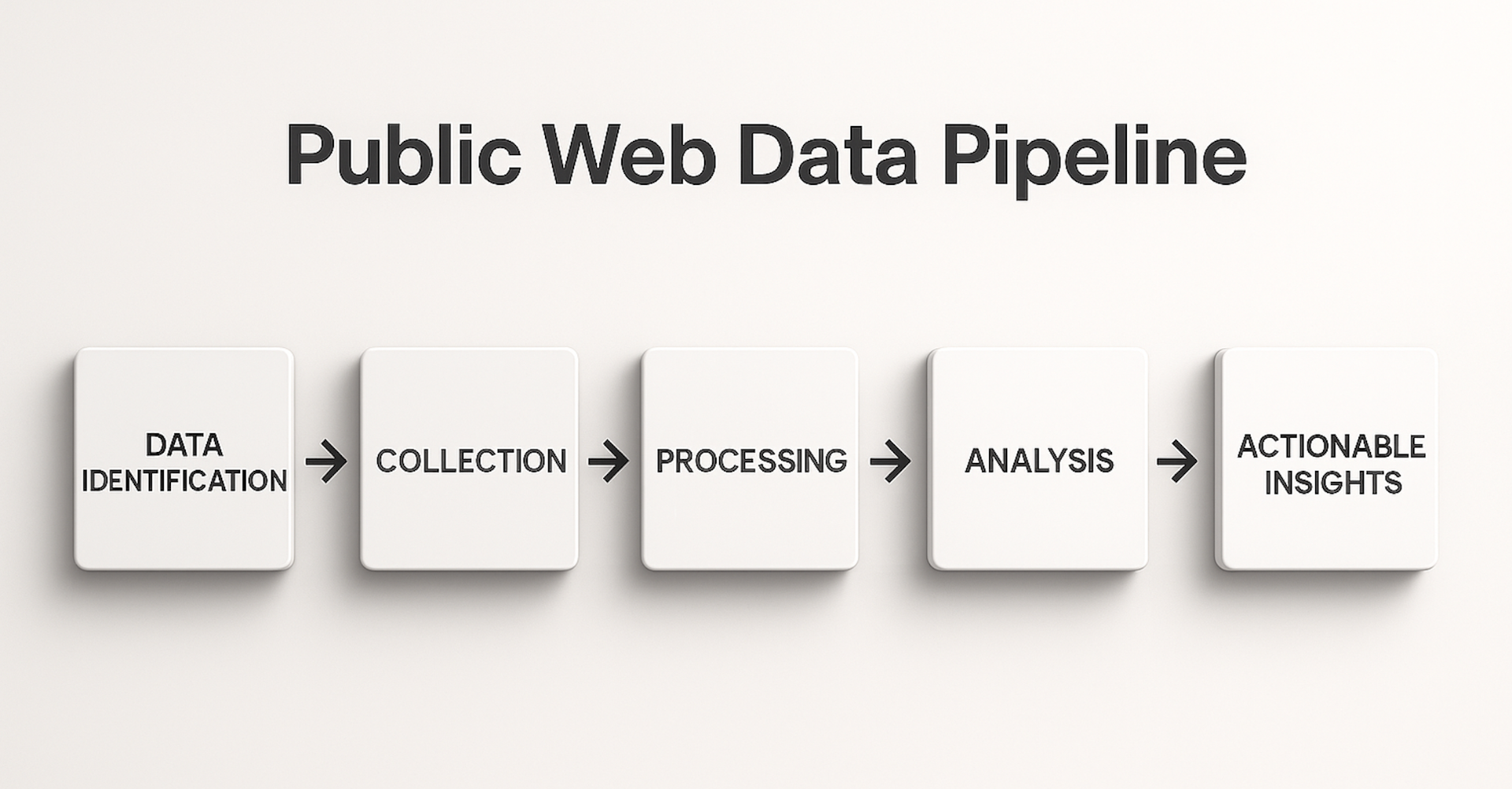
Below is an enhanced flowchart showing a typical public web data pipeline within an organization:
Democratizing data is more than just industry jargon. It's a shift in how organizations leverage information to foster innovation, create efficiencies, and stay ahead of the competition. By tapping into public web data, teams remain agile, responding quickly to changing market conditions and unlocking opportunities hidden in plain sight. With the right mix of ethical practices, modern scraping tools, and integration strategies, companies large and small can fully harness the advantages of open information.
In the near future, we'll likely see an even tighter interplay between AI-driven automation and public data sources. Machine learning algorithms may soon refine and enrich scraped datasets in real time, providing a near-instantaneous feedback loop for product development and market analysis. This prospect underscores the need for proper governance and strategic vision, ensuring that the democratization of data continues to empower people, drive ethical innovation, and accelerate competitive growth across industries.
Ultimately, public web data benefits everyone, from budding entrepreneurs to well-established enterprises, by fueling creativity, promoting fair competition, and expanding access to high-quality insights. In an era defined by rapid information exchange, democratizing data ensures that every player in the market can keep pace, tackle new challenges, and discover fresh paths for growth.
Written by Anakin Analytics Team