

Behind every flawless customer experience lies a labyrinth of algorithms and automated microdecisions. Ride-sharing apps are the perfect example. A simple tap-to-ride journey is powered by millions of real-time data points. AI stitches all of them together, helping build dynamic pricing models that make the concept work at scale.
For consumers, dynamic pricing translates to fluctuating fares.
For businesses, it's a delicate balance between profitability and customer trust.
The real question isn't whether dynamic pricing works in ride-sharing apps (It clearly does!), but how today's ride-sharing companies can harness the power of AI-based dynamic pricing and competitor data responsibly, making sure the hidden costs of convenience don't outweigh the long-term value it creates.
A fundamental challenge in all ride-sharing apps (Uber, Lyft, Careem...) was matching rider demand with driver supply in real time. Peak hours, sudden weather changes, traffic, or local events instantly tipped this balance. It often led to driver shortages and frustrated customers.
AI-powered dynamic pricing solves this at the root by adjusting fares in response to shifting conditions. For instance, to balance demand and supply, Uber's AI engine continuously analyzes conditions and data points like:
In-built algorithms then use this data to set prices dynamically, feeding updates directly into the app for riders and drivers. This real-time intelligence not only keeps the whole system efficient but also ensures fairer earnings for drivers and faster access for riders.
The brilliance of AI-driven dynamic pricing lies in how it makes ride-sharing scalable and seamless. But every innovation comes with trade-offs, and in this case, the costs are not always visible at first glance.
For starters, while dynamic pricing guarantees convenience for one rider, it can feel like unpredictability for another. Sharp fare increases may be perceived less as supply-demand adjustments and more as opportunism.
Another caveat is staying competitive in markets where supply-demand imbalances exist. If competitors in an area have raised prices, your dynamic pricing strategy needs to reflect that shift. A lower fare may leave money on the table during peak demand, while a higher fare risks pushing customers toward alternatives.
At scale, these issues get amplified. Certain geographies, times of day, or customer segments can feel disproportionately affected by frequent fluctuations. Riders who once relied on you may begin exploring competitors.
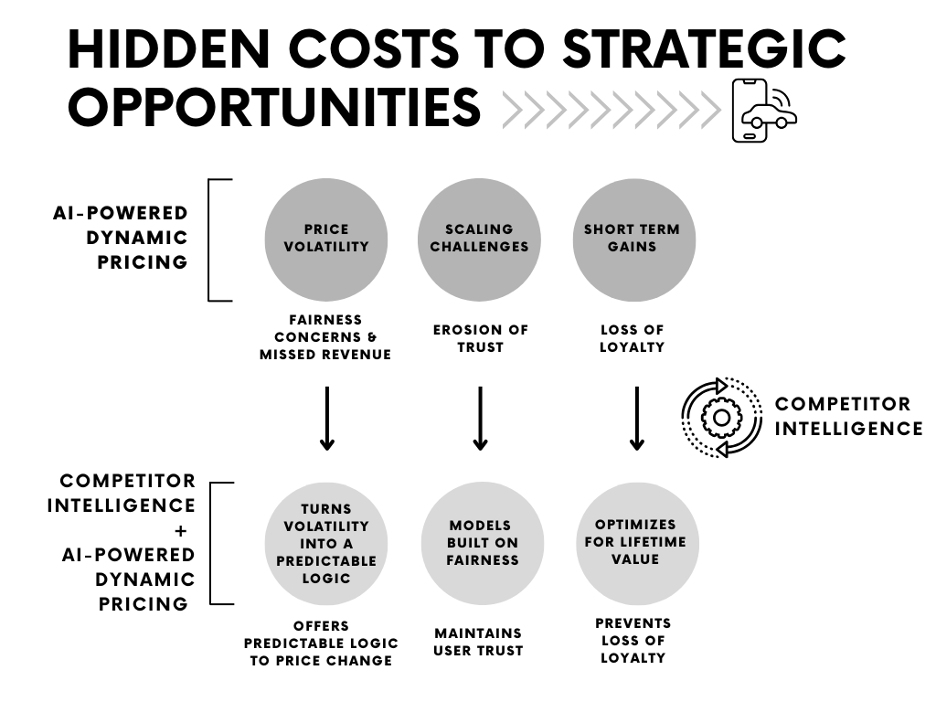
Acknowledging the hidden costs of dynamic pricing is not about forgetting and continuing your operations; it's about turning them into opportunities for revenue growth using competitor intelligence. In fact, a ride-hailing firm that blended competitor intelligence with dynamic pricing experienced 12% faster revenue growth. Here are the different ways in which competitor intelligence converts the hidden costs of dynamic pricing into strategic opportunities:
When you layer competitor data into your dynamic pricing engine, unpredictable fare surges turn into explainable, data-backed adjustments. This helps you successfully capture revenue during high-demand periods without overcharging or undercutting considerably.
Take a rainy evening, for example. If other ride-hailing apps in the same area have raised prices because demand is spiking and drivers are in short supply, competitor intelligence can confirm this is a genuine market trend. You can then adjust fares with confidence - charging just enough to match demand so that you neither lose customers (due to overpricing) nor leave money on the table (due to undercutting).
Result: Sustainable revenue capture during the very periods when demand peaks and supply is scarce.
When dynamic pricing scales, complexity creeps in. Riders feel punished by "random" surges. Competitor intelligence builds fairness into the whole system so that fares stay explainable, locally grounded, and less as "opportunism".
For instance, for every route and vehicle type, Anakin scrapes live pricing, surge multipliers, ETAs, vehicle availability, service/other fees, payment options, and active promos. This helps you set a local, real-time "fair range" so your app isn't the odd one out in any zone when users compare rideshare prices.
You can also apply zone-based fare caps, rate-of-change limits (no sudden 1.2× → 2.0× jumps) to prevent steep surges in low-demand areas while still allowing higher caps in genuine hot spots (e.g., city centers at rush hour) based on market data.
Result: Your app maintains user trust while still optimizing fares across different geographies and times.
The real risk of dynamic pricing is that chasing quick revenue can quietly push loyal riders toward your competitors. Frequent fluctuations may look profitable in the moment. However, they can erode trust and retention over time.
Anakin solves this by helping you price with lifetime value in mind. Instead of applying blunt, one-size-fits-all surges, Anakin can scrape ride-hailing data across different user personas, such as new vs. returning riders (or free vs. paid plan users or subscribers vs. occasional riders). This level of granularity allows you to understand how each segment reacts to price changes and tailor pricing strategies accordingly.
For example, new riders might need softer price adjustments to avoid churn. Older riders may accept higher peaks if paired with loyalty incentives. By blending competitor pricing with persona-specific data, Anakin can help you decide when to monetize aggressively and when to prioritize retention.
Result: Builds long-term rider loyalty by balancing revenue gains with retention-focused pricing strategies.
AI-powered dynamic pricing has already proven its mettle in the ride-sharing industry, but its hidden costs cannot be ignored. The real differentiator lies in how you manage these trade-offs. By combining it with competitor intelligence offered by Anakin, you can transform pricing to a proactive strategy: explaining fare changes instead of surprising users when they compare rideshare prices and creating equitable surges for fairness. Want to know how Anakin can help your business? Contact us now.
Written by Anakin Team