

In the cutthroat retail space, pricing is more than just sticking a tag on a product; it's a complex blend of psychology, strategy, and timing, all rolled into one. Set your prices too high; you risk driving customers away. Set it too low; you miss out on potential profits. The key to this puzzle? Mastering various retail pricing strategies that not only attract buyers but also protect your bottom line. In this guide, we will take a look at 7 time-tested retail pricing strategies with examples that you can take inspiration from and apply them to your own retail business. But first, some basics.
It's a method to determine the best price for a product. This "best price" is obtained by considering different factors like:
When executed to the t, a pricing strategy can become a growth driver and outmaneuver your competition. With that basic introduction, let us move on to the strategies.
Here are the different types of retail pricing strategies, complete with real-world examples -
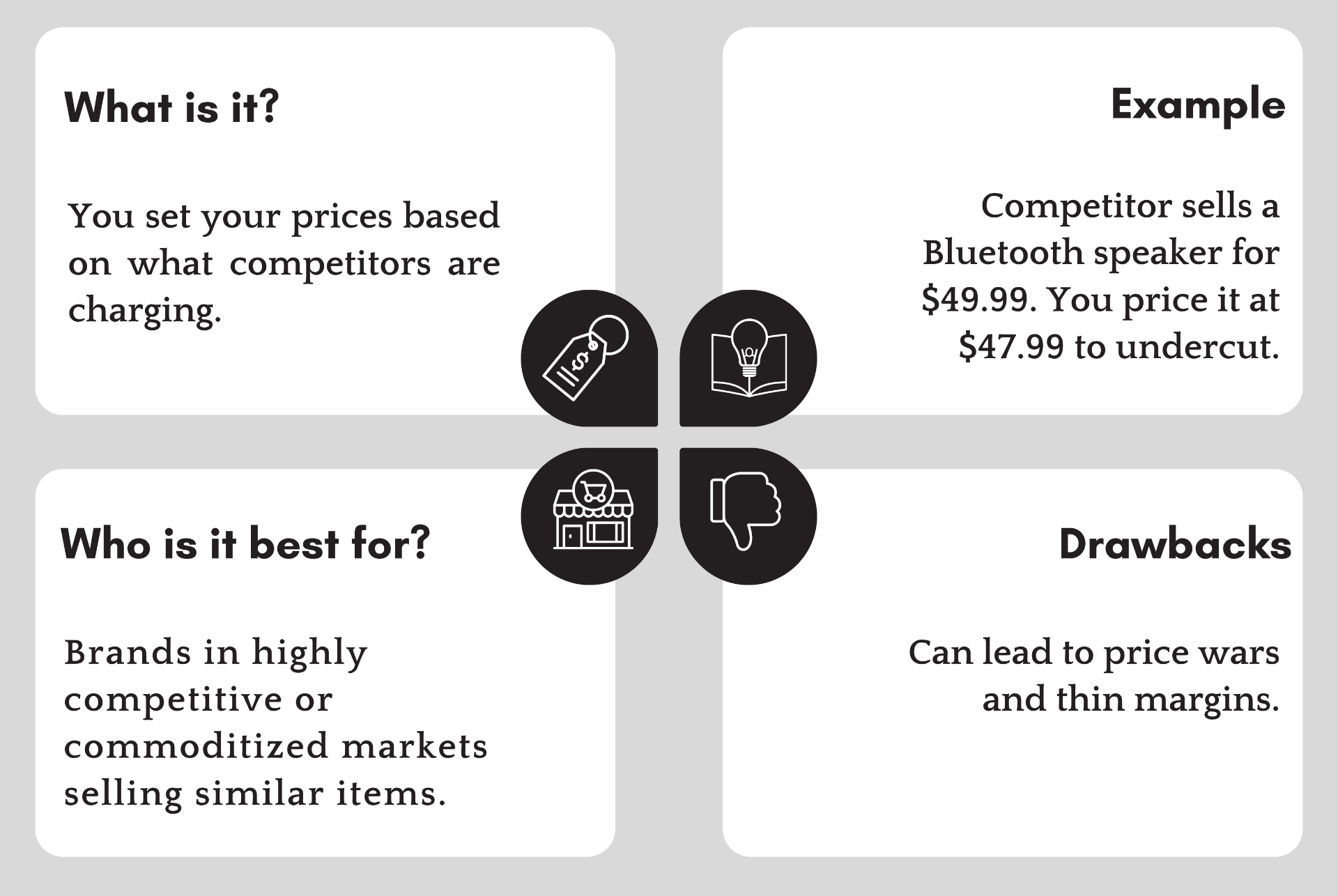
It's a retail pricing model where you set prices based on what your rivals are charging for similar products. In this, you ignore internal factors like manufacturing costs or brand value. Instead, you set prices that are aligned with market trends. The goal of this strategy is simple - appeal to price-sensitive customers.
Sainsbury's, a leading UK supermarket chain, uses real-time price matching to stay competitive with rival Aldi. The brand continuously matches its online prices with Aldi. This way, it ensures two things. One, customers receive the best possible deal every time they shop. Two, they stick with them longer.
To implement this strategy effectively, you can use real-time pricing intelligence tools to get accurate, up-to-date pricing data across the market. This helps you benchmark and adjust prices with confidence.
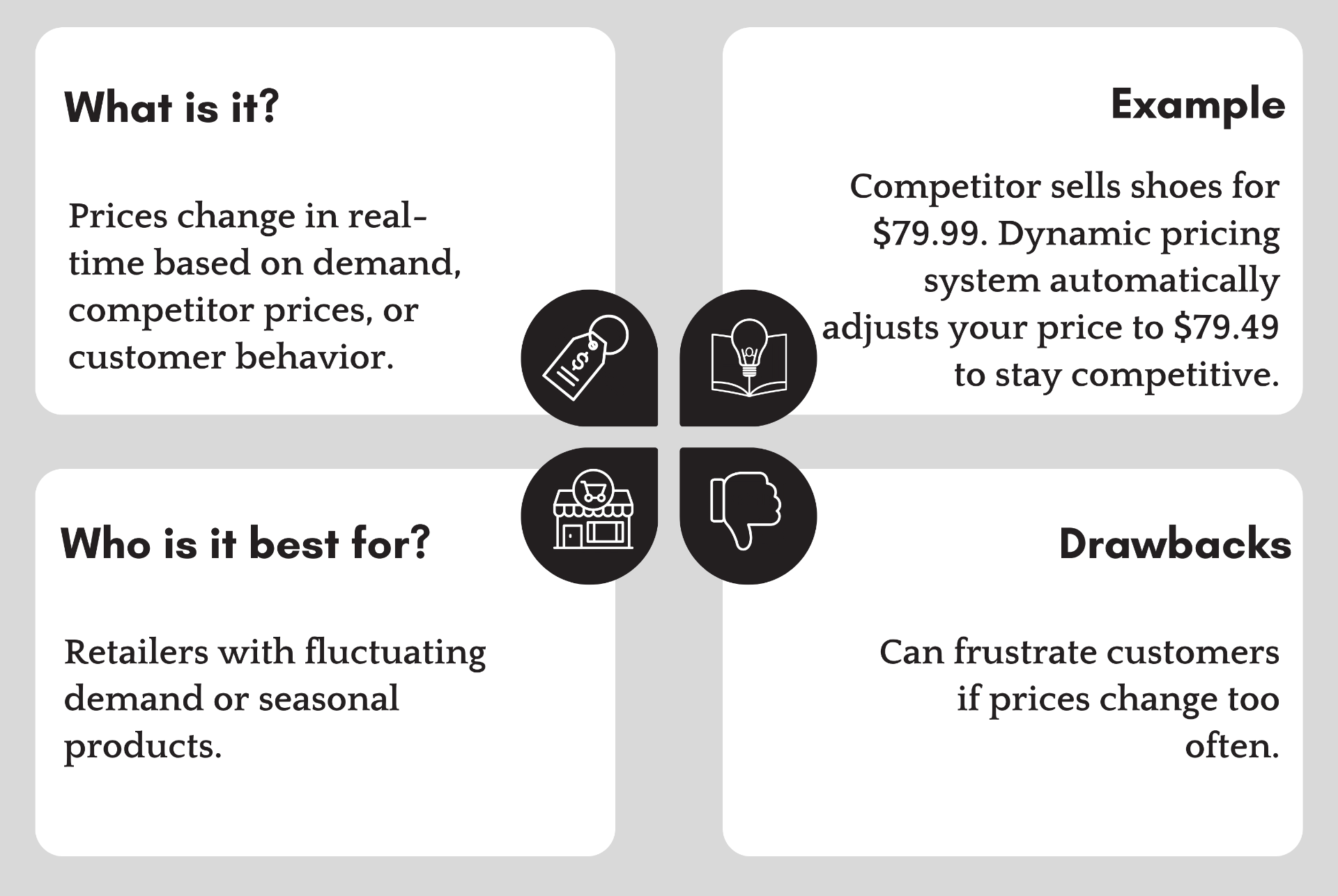
Dynamic pricing is a strategy where your prices continuously adjust in real time. It could change based on:
This strategy is usually executed via a dynamic pricing software. It analyzes data and automatically adjusts prices with two main goals. One, maximize revenue. Two, appeal to customers.
Amazon's proprietary pricing engine analyzes customer behavior, competitor pricing, demand patterns, market trends, etc., in real-time. It uses the assimilated data to set the optimal price for each SKU. For example, in response to discounts from rivals like Best Buy, it has been found that Amazon reduces its prices by up to 20%.
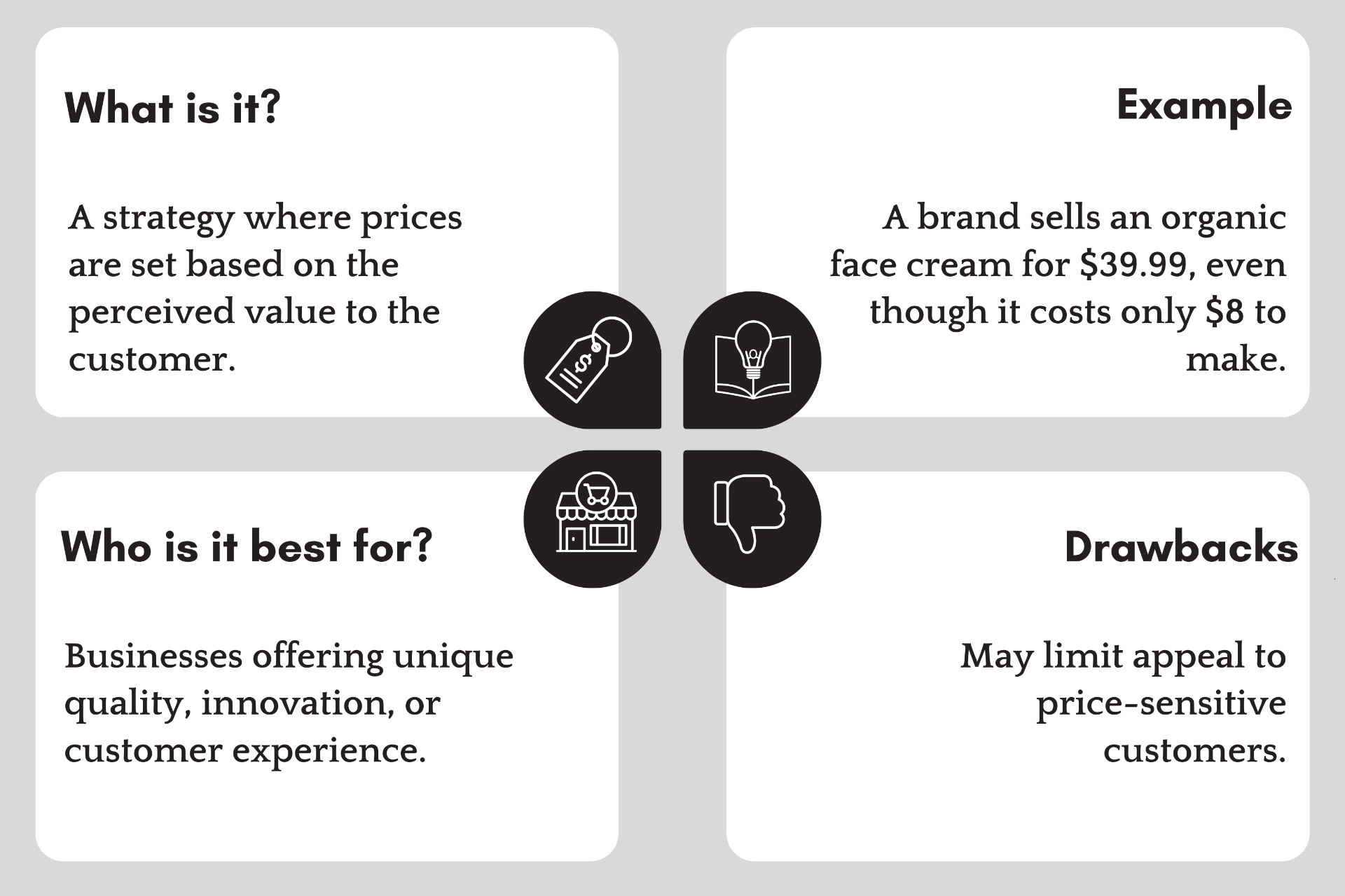
In this strategy, the price of a product is set according to the customer's perceived value of it. In other words, it focuses on what the product means to the buyer. However, this strategy works well only when the product offers unique benefits or emotional appeal. Alternatively, it should offer the prestige of owning that justifies a higher price point.
Gucci is a master of value-based pricing. Its products aren't just handbags or shoes. They're symbols of luxury and exclusivity. In other words, customers aren't paying for materials alone. They're investing in the brand's legacy.
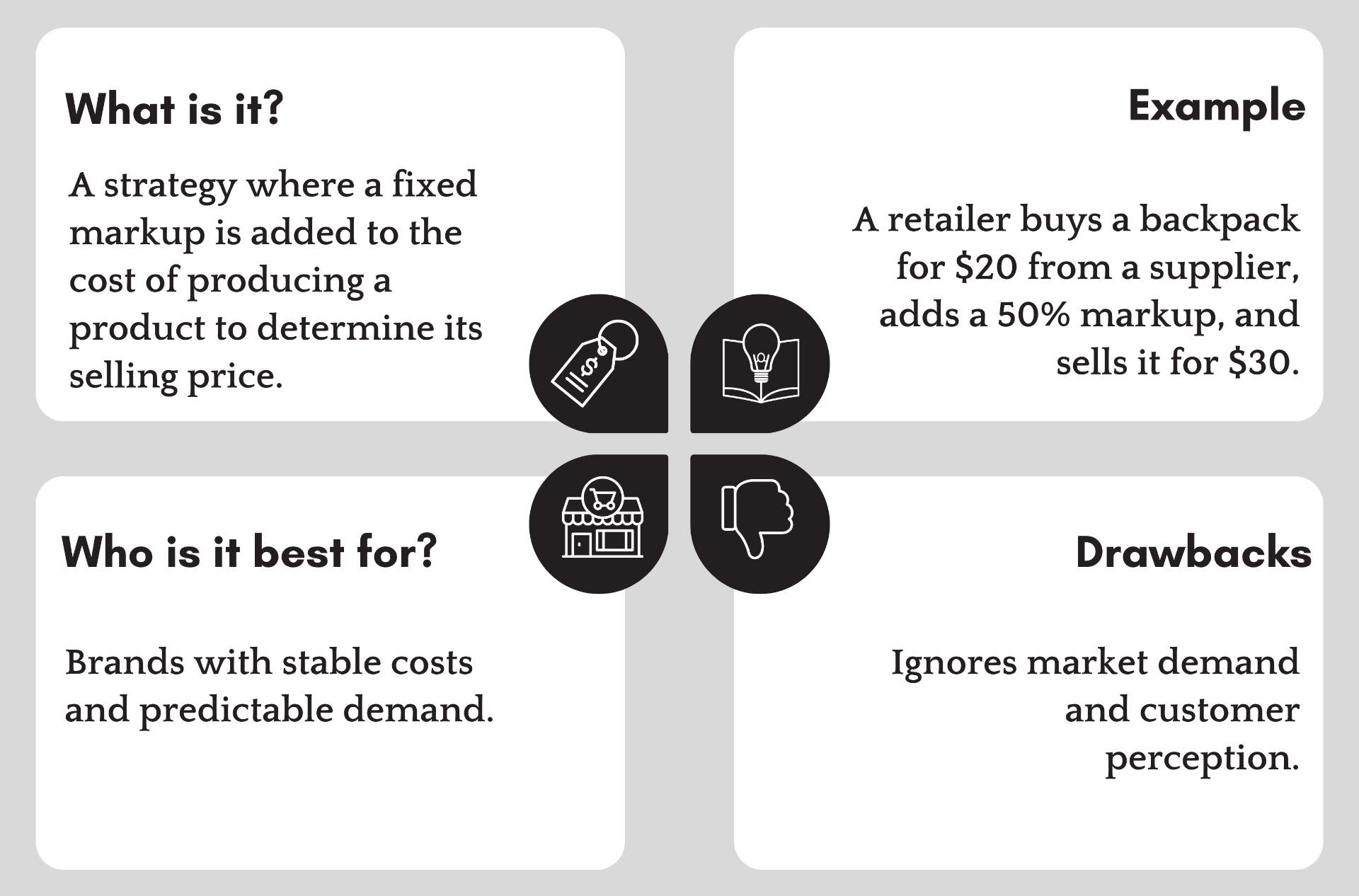
This is probably the simplest and most widely used strategy. It involves adding a fixed percentage markup to the cost of producing a product.
The formula is straightforward:
Cost Price + Markup = Selling Price
This method ensures you always cover your costs. More importantly, you end up with a profit. However, there's a catch. It doesn't consider customer demand or competitor pricing. So while it's easy to apply, it is useful only in stable or low-competition markets.
Many small or traditional retailers rely on cost-plus pricing. For instance:
This simple strategy ensures three things. One, you receive predictable profits. Two, you keep pricing structures simple. Three, you keep the pricing process scalable across thousands of products.

It's a pricing strategy where businesses launch a new product or enter a new market with a significantly low price point. This is done to "penetrate" the market or gain market share quickly. Once the brand is recognized and demand is solid, prices are gradually increased to more profitable levels.
For example, when Aldi entered the UK and US markets, it offered private-label products at rock bottom prices. It was typically 15–30% lower than mainstream brands. Thanks to streamlined store layouts and limited product ranges, they could survive with low margins.
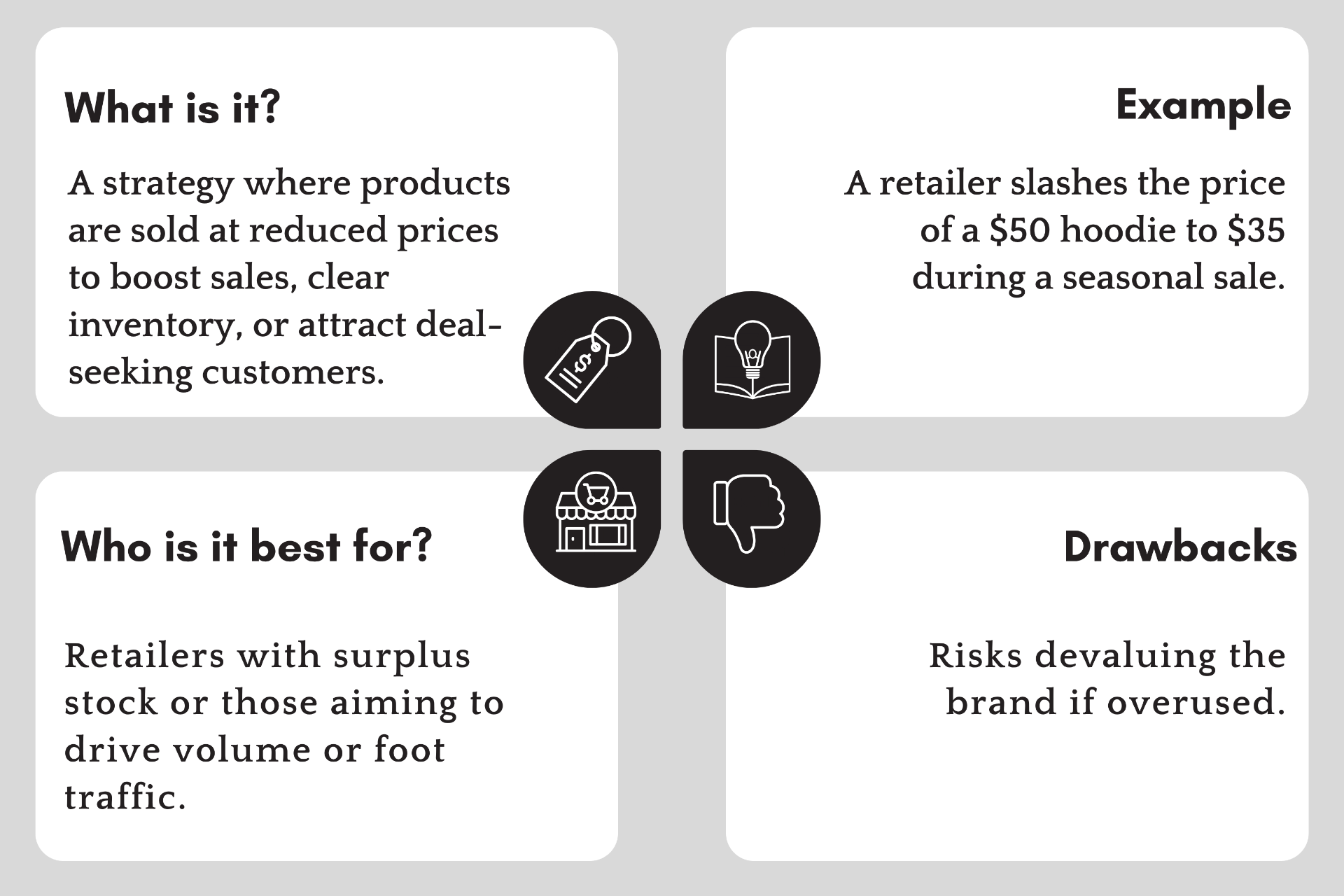
Discount-based pricing is a strategy where retailers offer temporary price reductions to drive sales or clear inventory. It could be a seasonal sale or a limited-time offer. The goal is twofold: Create urgency and increase volume.
Such discounts might reduce profit margins in the short term. But they can boost traffic and improve cash flow when used strategically.
Amazon thrives on discount-based pricing. During events like Prime Day or Black Friday, it offers huge discounts to drive incoming traffic. Even outside major events, shoppers constantly see slashed prices and "limited-time deals,". This often triggers FOMO (fear of missing out) and gets them to purchase the product.
To keep up in such a dynamic environment, you must monitor not just list prices but also ongoing promotions and stockouts across competitors. Some advanced price monitoring tools can help with this, too. Whether a competitor launches a flash sale or runs out of a bestselling product, you'll be instantly alerted to make intelligent price changes.
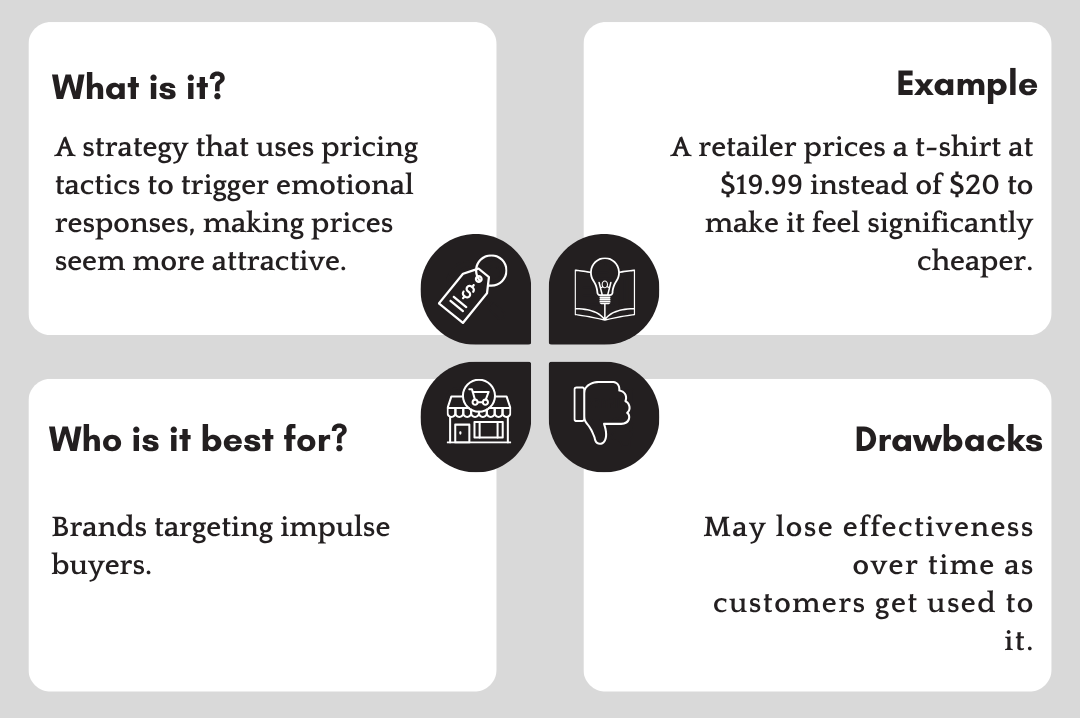
This retail pricing model taps into the way customers perceive value. It uses clever price points to make products feel cheaper than they are. Instead of rounding up, prices are set just below whole numbers because humans' brains tend to process the first digit and perceive it as a better deal.
McDonald's has mastered psychological pricing. It lists its products at price points like $4.95 or $5.99. As you can see, it is usually a tad less than a round number. Why? Because $5.99 feels cheaper than $6. This is despite the fact that the difference is negligible. This small shift pushes customers to say "yes" without overthinking.
Here are 5 key factors you need to consider while adopting one or more retail pricing strategies for your business:
Find out what you want your pricing strategy to accomplish. Are you looking to maximize profits? Trying to gain rapid market share? Planning to establish a premium brand image? Or simply trying to stay competitive?
For instance, if your goal is to boost profit margins on high-value products, then value-based pricing could be a good choice for you.
Get a clear picture of your cost structure. This includes:
Once you understand your break-even point, determine the minimum price you need to charge to maintain profitability. Strategies like cost-plus pricing rely heavily on this factor.
Dig into your customer base. Are they price-sensitive bargain hunters? Are they willing to pay more for quality? Do they value brand prestige or convenience? For instance, if your customers are highly price conscious, then discount pricing could be a good strategy for you.
Look at how your competitors price similar products. Are they undercutting others aggressively? Or are they frequently running sales? Analyzing these data helps you position your products strategically in the market. For instance, if you're in a crowded space with minimal product differentiation, competitive pricing could be your strategy.
Assess the nature of the product you're selling. Is it seasonal or perishable? Is it a daily-use item or a luxury product? Some products are better suited for discount pricing (like electronics). Some have consistent demand and may work well with psychological pricing.
Here is a simple question-based framework that will help you decide the right retail pricing strategy for your business:
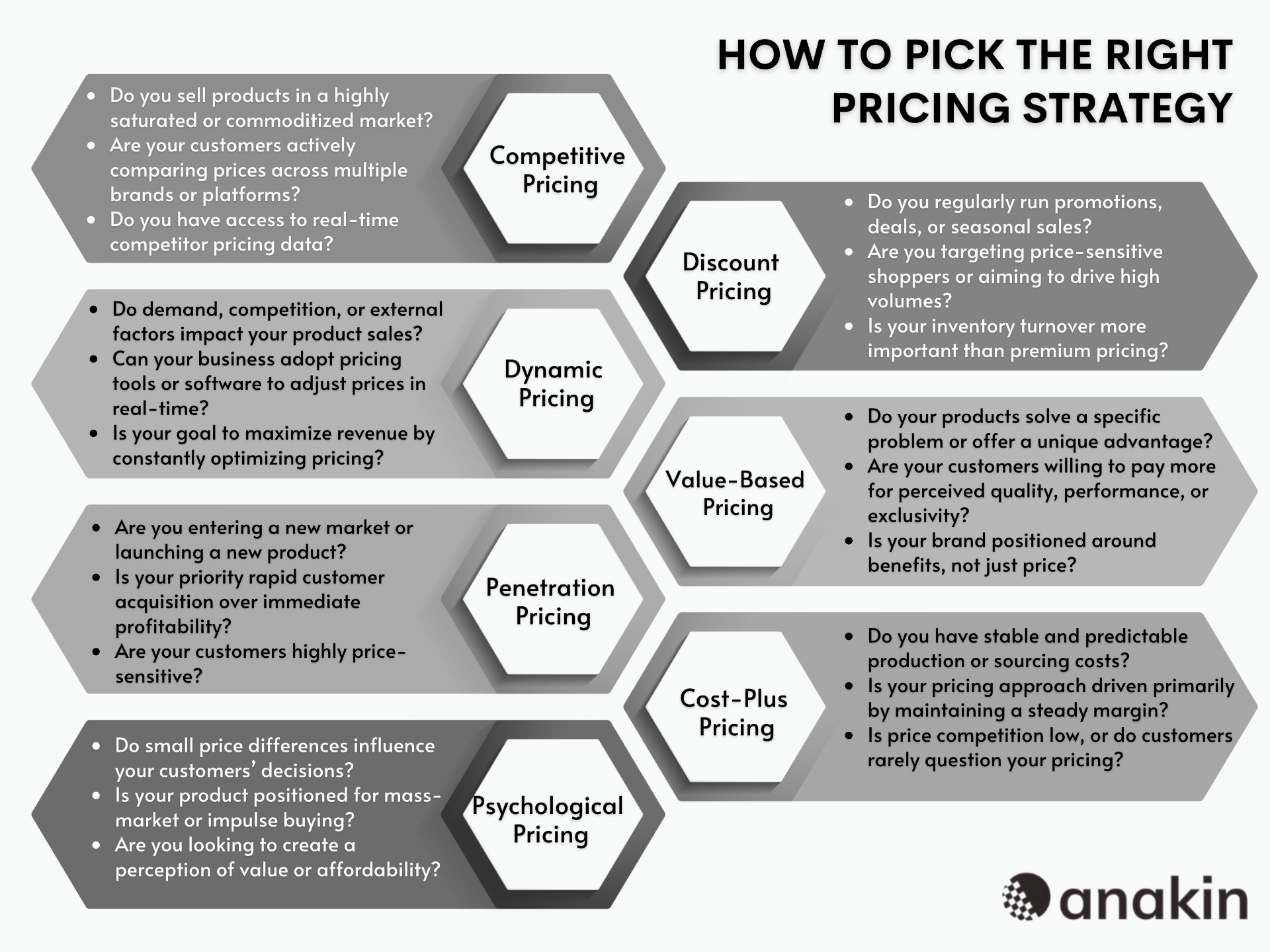
Pick any of the above strategies. Flawless execution starts with one non-negotiable: Accurate competitor pricing data. Some strategies(like competitive or dynamic pricing) depend on it entirely. Others (like cost-plus or value-based pricing) still need it as a reference point. Without it, your strategy is like shooting arrows in the dark.
This is where Anakin becomes indispensable. Our platform goes beyond traditional scraping tools by offering persona-based scraping to execute your retail pricing strategy with greater accuracy.
It simulates different buyer profiles to capture user-specific pricing data, helping you uncover data such as:
Our pricing engine uses advanced extraction methods and continuous monitoring to turn raw pricing data into such decision-ready intelligence.
The best part - our engine tracks prices as often as you need. It could be anything from monthly to every hour, ultimately adapting to your category's pace.
The result: reliable competitive insights that help you adjust prices for different personas with confidence. Want to see Anakin live in action? Book a demo now.
Written by Anakin Team