

Over the years, we've seen many ecommerce businesses juggling thousands of SKUs and entering frantic price wars, only to be quietly undercut by their rivals. The culprit: "Mismatched SKUs". It fragments their catalogs, obscures true pricing comparisons, and gives their competitors an easy advantage.
But with product matching, things turn around quickly. It instantly connects their catalog to competitors', filters out fakes, and keeps regional quirks in check, all in real time. In this post, we'll peel back the curtain on how product matching solves some of the biggest challenges faced by ecommerce sellers today. But first, some basics.
Product matching is the process of pairing identical or highly similar products listed under different names or formats across two or more ecommerce platforms or catalogs. It has found a strong application in executing price-matching strategies as it is the key to ensuring that the prices being compared are for identical products, not just similar ones. Without accurately matching the product, price comparisons can be misleading or incorrect.
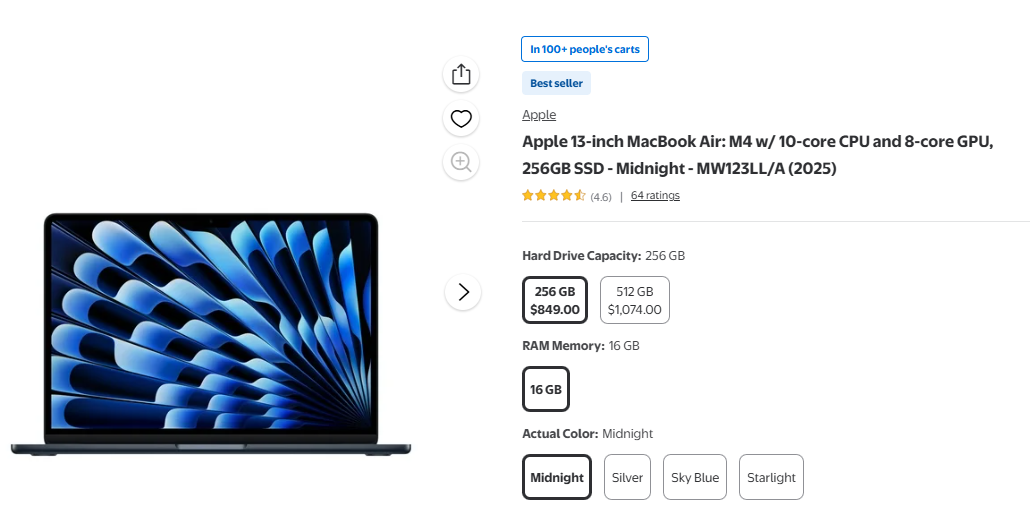
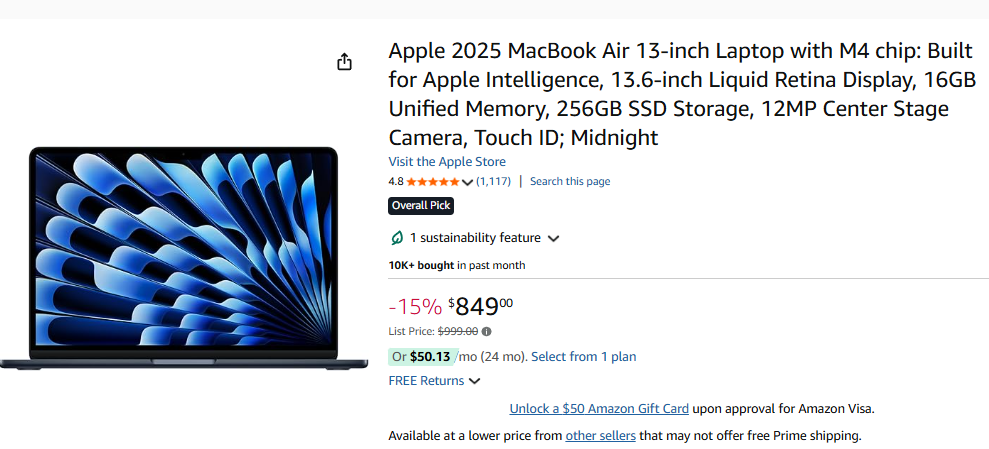
For instance, the below identical product is sold on Walmart and Amazon with different names. Without product matching, it would be challenging to recognize that both listings refer to the same item, especially when they are being manually compared along with thousands of other listings. This can lead to inaccurate price comparisons, missed pricing opportunities, and even duplicate entries in the catalog.
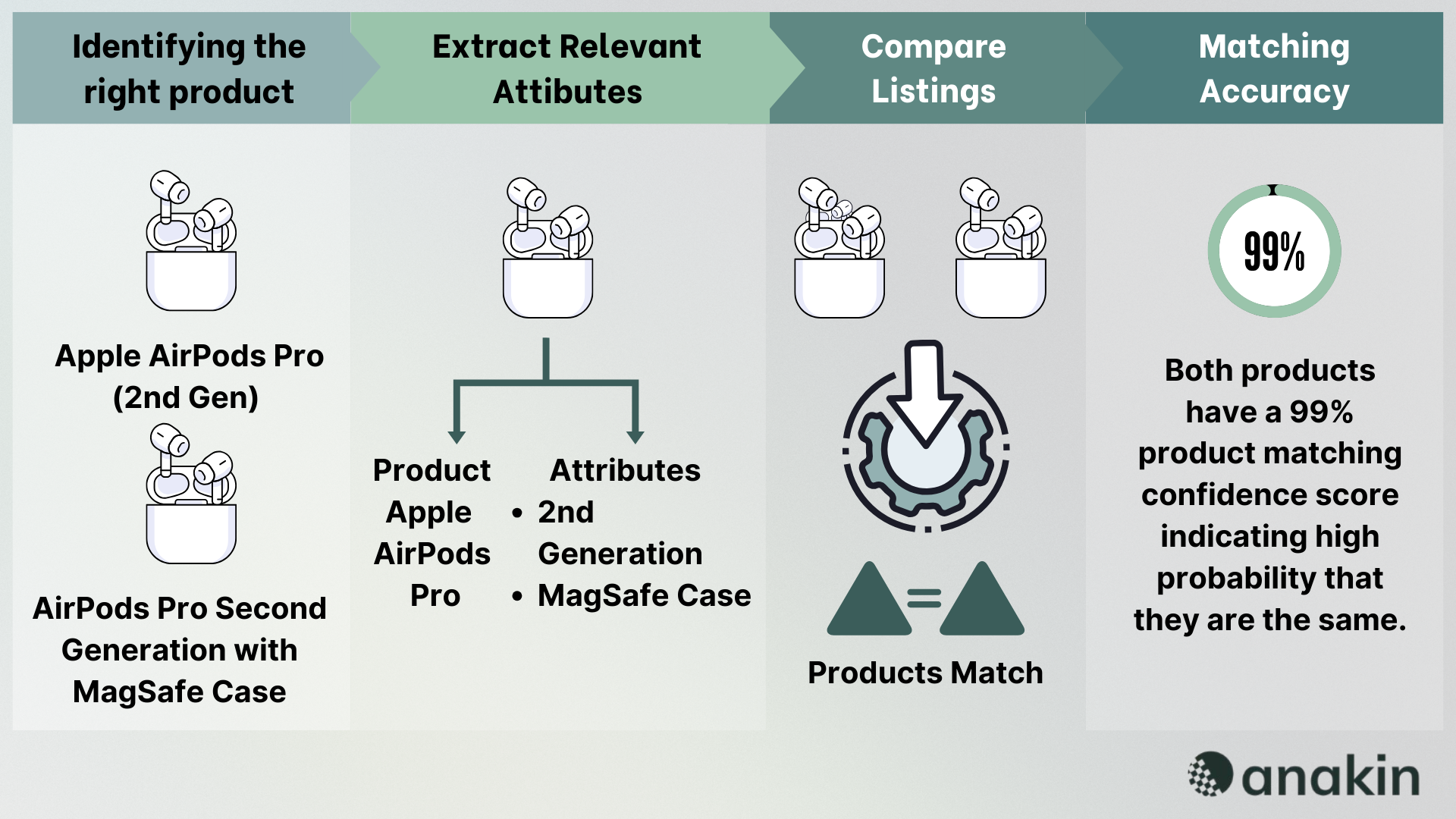
Here are the typical steps of product matching in ecommerce:
This is done by analyzing different data fields such as the title, product description, specifications, etc. In many cases, the title alone carries a lot of valuable information, but it's not always presented consistently. A well-trained product matching ecommerce system learns to differentiate the core product name from all the supporting details.
This involves extracting specific features and organizing them into structured categories. These attributes are then sorted so the system can create a standardized representation of the product.
The structured data from multiple sources is then compared using machine learning and natural language processing (NLP) algorithms to analyze textual similarities, contextual meanings, and structured fields like brand, size, color, model number, and technical specifications. They don't just rely on exact keyword matches; they learn patterns from training data to understand that "Apple AirPods Pro (2nd Gen), and "AirPods Pro Second Generation with MagSafe Case" refer to the same product.
The product matching software then evaluates how closely the listings align and generates a confidence score. Most mature systems require at least a 99% confidence level to call it a match. Anything below that threshold is treated as a mismatch.
Product matching isn't just about finding identical items; it's about finding exact matches with absolute certainty. This high level of accuracy ensures a cleaner catalog and more reliable business data.
Ecommerce is riddled with a variety of problems. Some of them can be easily solved by adopting a robust ecommerce product matching system like that of Anakin. Let us look at a few of these challenges and how product matching solves them:
Knock-offs and grey-market versions are rampant in the ecommerce space. These products look nearly identical to real products. But they will differ in quality, packaging, or warranty. Without careful inspection, you will mistake them for the real deal and end up with the wrong pricing strategies.
For instance, a retailer finds what looks like their bestselling stylus listed on another site for much less.
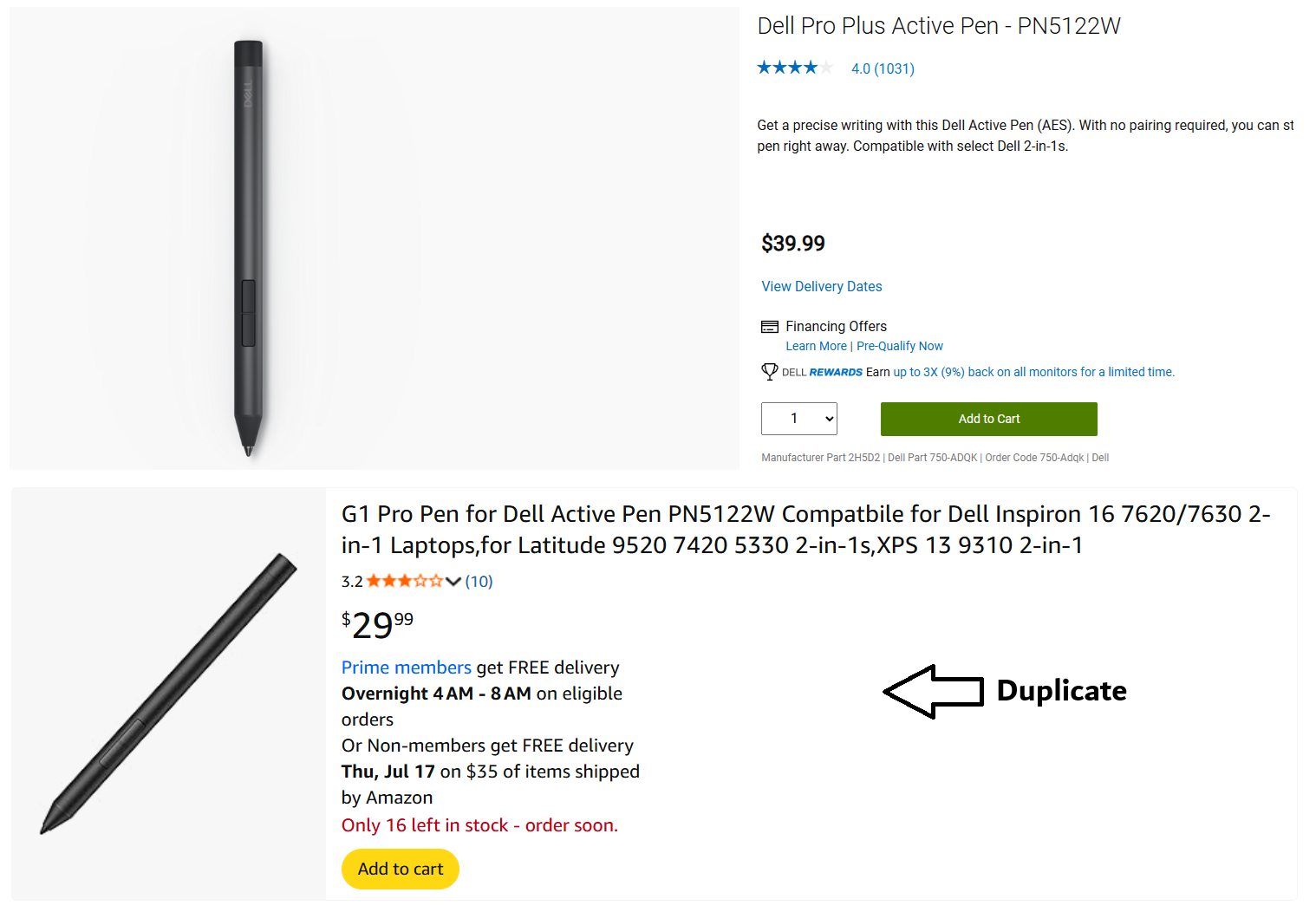
The images and title match, but it turns out to be an unauthorized import. To counter this, they end up lowering their price, which affects their margins.
Anakin's product-matching tech solves this challenge through its domain-trained matchers, who can assess seller trust, flag suspicious listings, and separate unauthorized or counterfeit items from genuine ones.
Similar products with slight differences, like size, quantity, or color, can confuse sellers during manual comparison, especially when those details aren't clearly mentioned or standardized.
For example, you're comparing your listing for a laptop with a competitor's. Their product is priced higher, and at a glance, both listings show the same brand and similar specifications You raise your price to match theirs. However, you missed that their variant is an Intel Core Processor, while yours is an AMD Ryzen one. You end up raising your prices without realizing that they are two different variants. Your customers realize your product offers less value and switch to the competitor, leading to lost trust and abandoned carts.
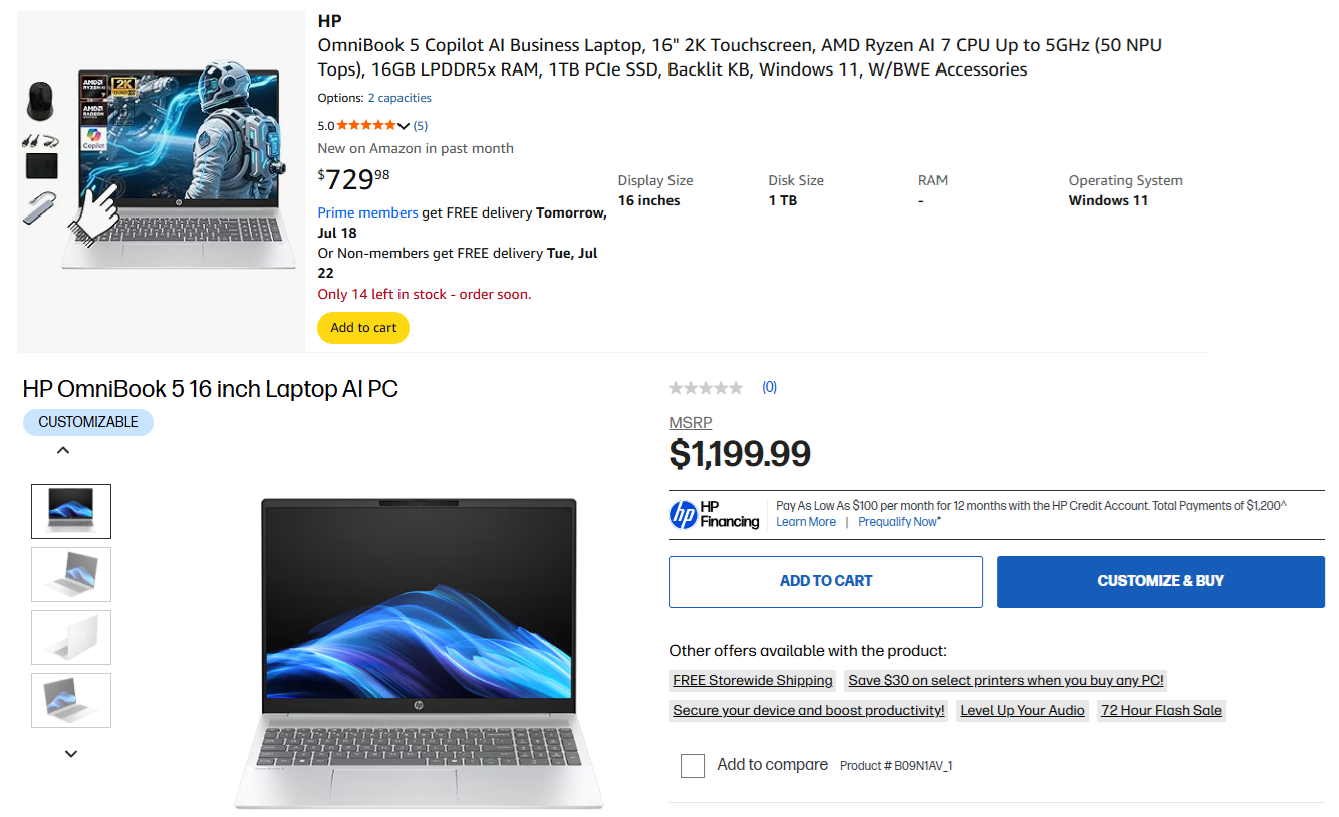
Anakin can prevent such costly errors by automatically detecting and grouping different variants based on an array of text and image-based attributes.
The same product sold in different regions may have slight variations, like units of measurement, compliance labels, or packaging, that can cause confusion when selling across markets.
For example, a retailer tries to match their US listing for a Tablet with a European competitor's version. While they look the same, one uses the Metric system and shows specs in centimeters, while the other uses the Imperial system and shows specs in inches.
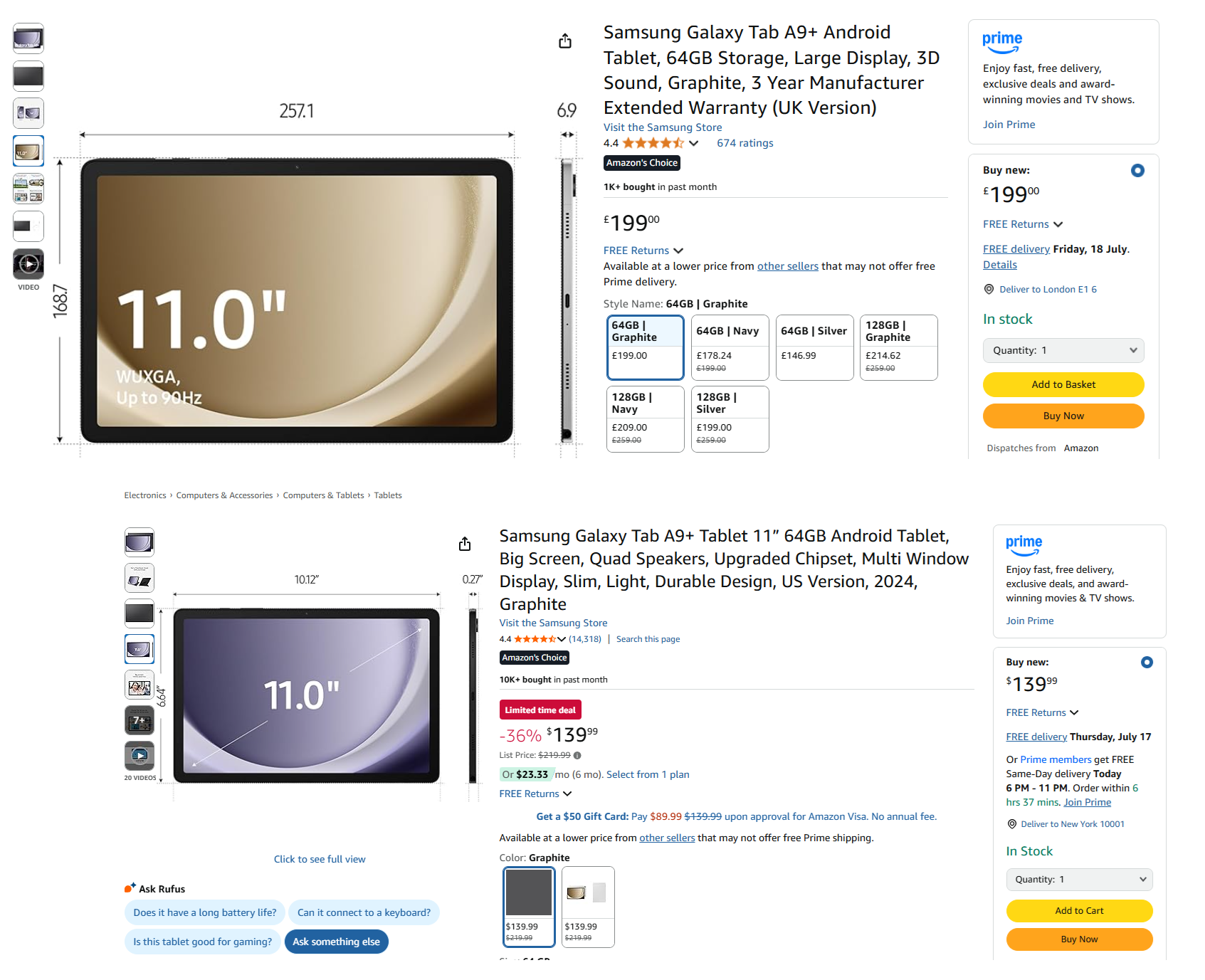
The seller ends up thinking that they are two different product offerings, leading to inaccurate pricing decisions. Worse, they might skip listing their product in the new market altogether, thinking there's no demand, when in reality, the data was just mismatched due to regional differences.
Anakin's product matching system fills this gap by adjusting for regional differences like currency, units, and certifications using AI-powered logics and customer-specific rulebooks, so you can compare apples to apples, even across borders.
Sometimes, one product listing includes extra accessories or items, but the titles look so similar that shoppers can't easily spot what's bundled. This can lead to lost sales.
For example, you manually compare a monitor listing with your competitor's. Both appear to have the same model name and image, so you assume they're identical.
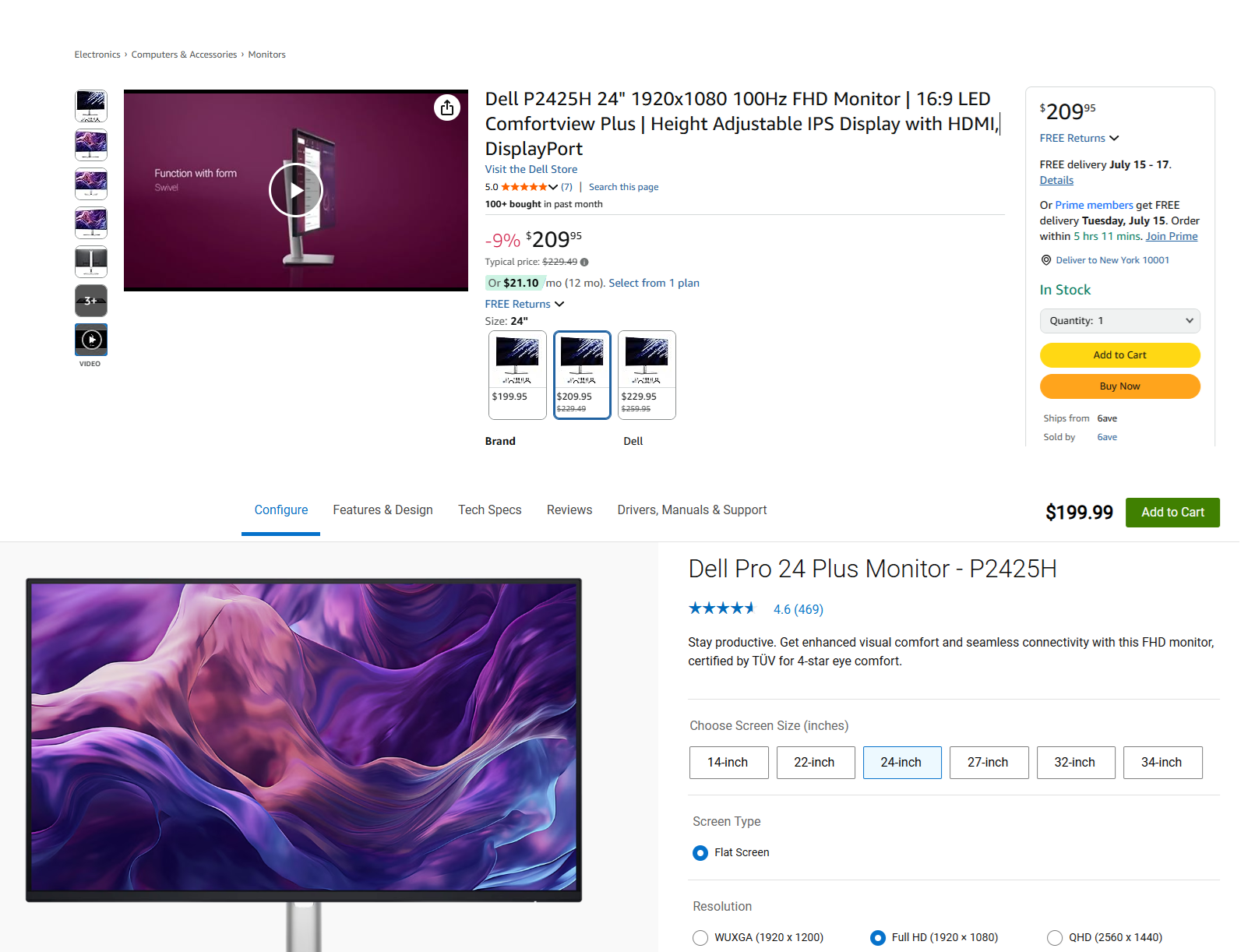
However, the competitor's version (priced $10 higher) actually includes a USB cable and a cleaning kit. The details are buried deep in the description. You quickly match their higher price, thinking it's a fair comparison. But customers notice the added value in the competitor's offer and end up choosing their listing over yours, costing you sales.
Anakin can automatically detect bundled items by analyzing descriptions, titles, images, and other category-specific parameters. This helps you understand what's included in every product, so price differences make sense and no one is misled.
Many of the ecommerce industry's biggest hurdles trace back to one core issue: inaccurate or incomplete product identification. Product matching addresses this head-on, acting as the bridge between unstructured product data and clean, reliable insights. However, matching products is only part of the equation. What truly matters is how accurately you match them.
Anakin was built for this exact challenge. Anakin goes beyond linear, rules-based data pipelines; instead, combines AI-driven candidate generation, GPT-powered evaluation, advanced image recognition, and Named Entity Recognition (NER) to understand both structured and unstructured product attributes.
We also have a team of trained matchers reviewing edge cases flagged by AI, ensuring error rates remain under 1–2%. With infrastructure capable of handling over a million products daily, Anakin delivers not just matches, but a competitive advantage to your ecommerce business. Learn more about the product matching capabilities of Anakin by booking a demo now.
Written by Anakin Team