
Shoppers today don't just buy, they investigate. Before making a purchase, they hop between browser tabs and scroll through multiple apps. Who can blame them? They want the best bang for their buck. As a business or online store, you must decide: will you be their final stop or just another tab they close? Done right, price matching turns cautious browsers into loyal buyers.
A price match is a battle-tested strategy employed by businesses to attract price-conscious customers. In this technique, the business matches or beats the price of an identical product if it's found cheaper at a competitor's store. The objective of price matching is straightforward - build trust and show customers that they don't need to shop around for the best deal, as they're already getting it. It's considered an ethical retail practice, common in both physical and ecommerce businesses.
A price match guarantee takes the concept of price matching a step further. It's a business's formal promise to honor a lower price if the same product is found at a competitor. For shoppers, a price match guarantee offers peace of mind as they know that if a better price pops up elsewhere, they're covered. For businesses, it's a powerful loyalty-building tool that helps prevent losing customers to competitors over price.
Not all price match strategies are the same. Different businesses follow different rules, and the fine print can vary widely. But broadly speaking, here are the most common types of price match strategies used across the business world:
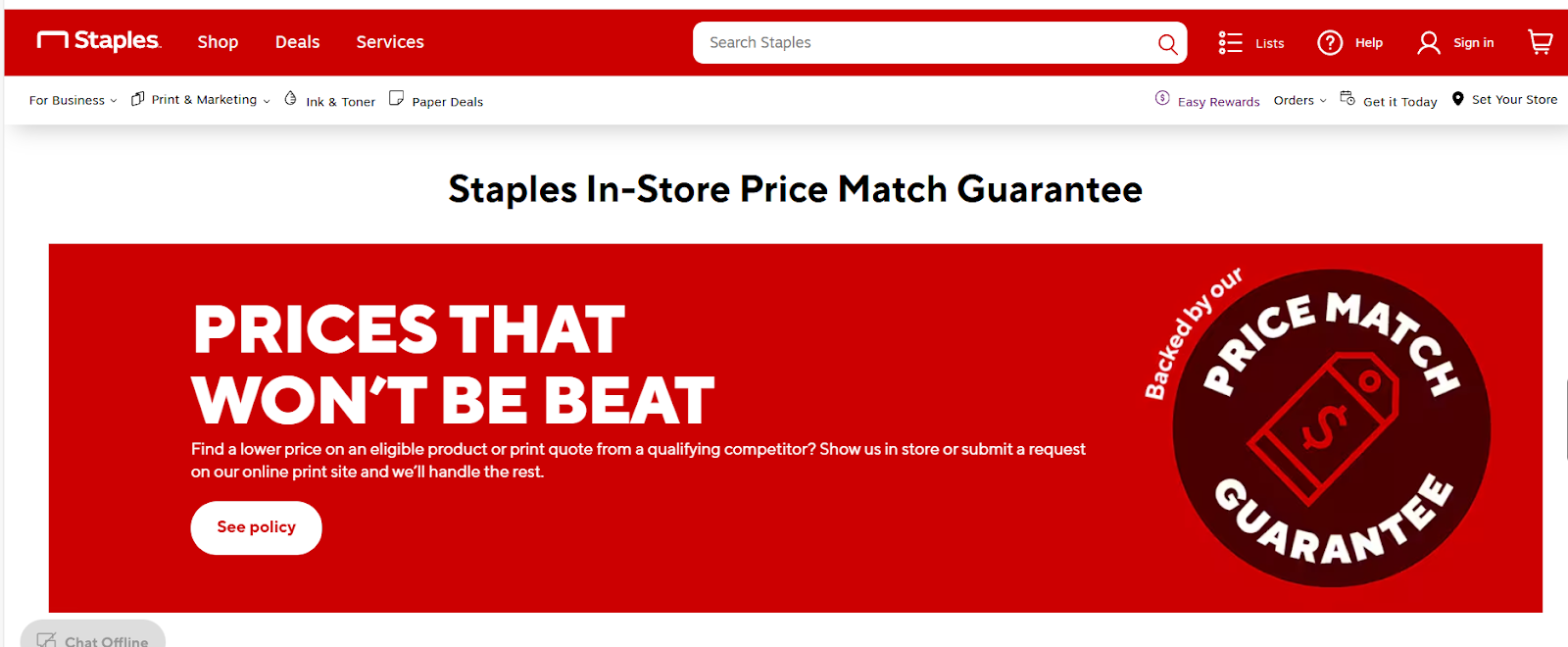
This is the most common form of price match when customers shop in-store. In this, the business agrees to match the price of an identical product being sold at a lower cost by a competitor. It's usually applicable at the time of purchase and requires proof, such as a flyer, link, or receipt. Staples, the renowned office supply retailer, offers this type of price match when customers visit their store.
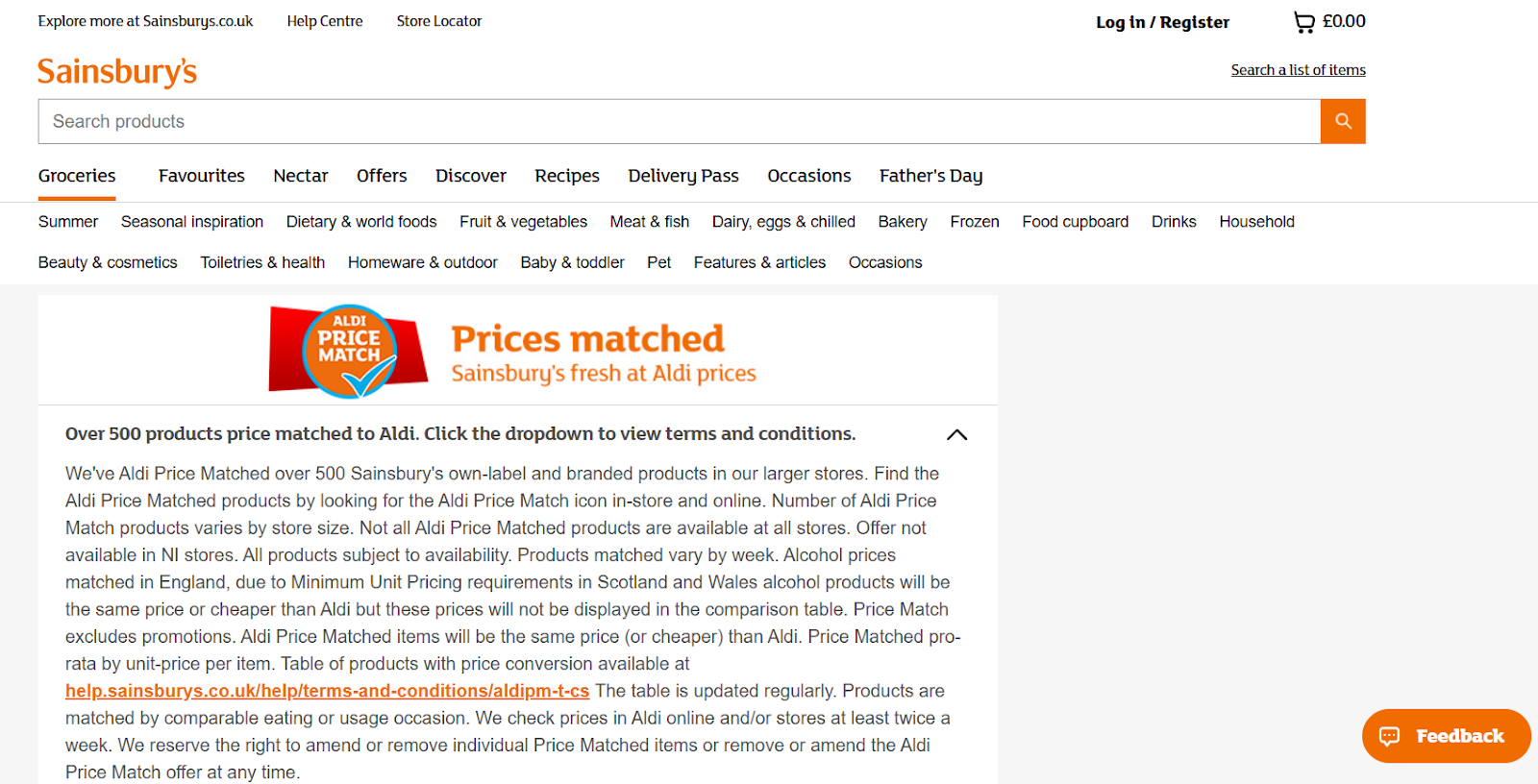
This is a proactive price match technique where the business constantly tracks the prices of its close competitors and ensures that it matches their prices in real-time. In price match online, customers need not wait to point out lower prices elsewhere, as the prices are already the lowest in the market. Sainsbury's, the UK supermarket chain, matches the price of its close competitor Aldi in real-time, ensuring that its customers always get the best deal when they shop online.
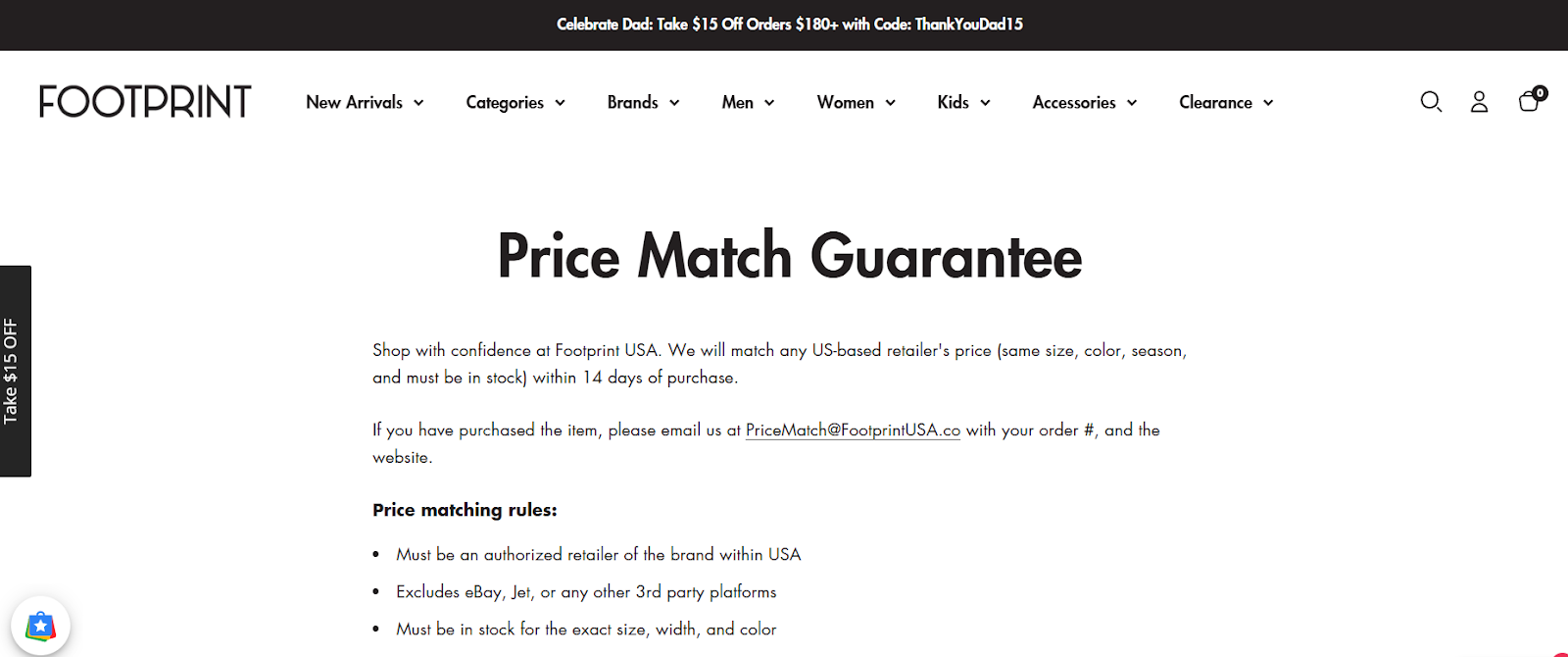
Some retailers extend their price match policy even after a purchase has been made. If a customer discovers the same product at a lower price elsewhere, they may be eligible for a refund of the difference. This builds trust and reduces post-purchase regret. Footprint, the footwear retailer, offers this type of price match:
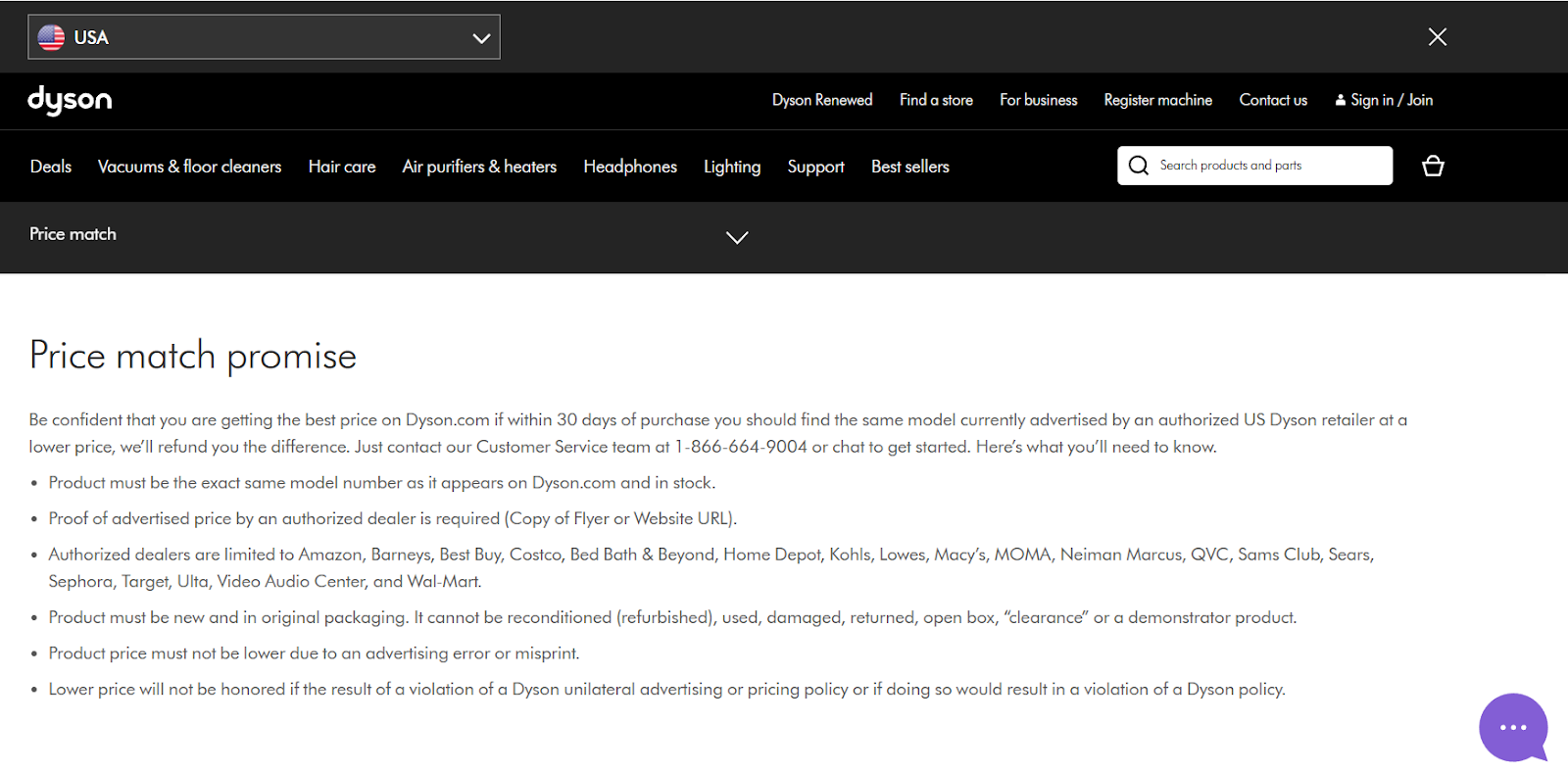
Similar to post-purchase price match, price protection applies when the business itself lowers the price of an item within a specified time frame after purchase (typically 7–30 days). In this case, the store refunds the difference upon request, even if the competitor isn't involved. It's a self-match policy that demonstrates pricing transparency. Dyson, the popular home appliances brand, offers this type of price match for all their products sold through authorised retailers.
Even the best price match strategy has its fair share of advantages and disadvantages. Here they are:
Price match can quickly drive growth by helping you stay competitive in the market. It offers the necessary confidence among price-sensitive customers who are on the edge to convert, as they know they're getting the best deal at that time.
Price match revolves around transparency and goodwill. Shoppers feel valued as they know they are being treated fairly. Such customers are more likely to return again and again, and even become your brand advocates over time.
By matching competitor prices, you reduce the chances of customers walking away due to unhappy price points. Instead, such a strategy converts them and helps improve your sales by keeping price-sensitive shoppers on your side all the time.
Matching lower competitor prices can eat into your profit margins. You feel the pinch, especially if your operating costs are high. Over time, this can hurt your financial stability and make it harder to cover expenses.
Price matching can trigger aggressive pricing battles. As you undercut or match your competitors, they will do the same to regain the sale and market. This will end up creating a race to the bottom, damaging profitability for everyone involved.
Constantly undercutting or matching competitors can slowly chip away at your brand's perceived value. When customers begin to associate your brand with being the cheapest rather than the best, it can dilute your positioning and drive away quality-focused and premium buyers.
Price matching is not a wand: one wave and the sales multiply. In fact, it can be a risky proposition without one critical ingredient: accurate, real-time price monitoring.
In today's cutthroat world, prices can fluctuate by the hour. Manual tracking just doesn't cut it anymore. This is where automated and real-time price monitoring comes into play. It allows you to continuously access the pricing of competitors, no matter where they are selling, be it websites, marketplaces, or even ads.
Price monitoring helps prevent unnecessary price matches. For instance, not every competitor discount warrants a response. Some may be limited-time flash sales or clearance items. A good monitoring system helps distinguish these from genuine pricing threats, so you only match prices when it makes business sense.
If using a price monitoring platform, you can also set intelligent price match boundaries, such as matching only selected competitors, setting a minimum profit threshold, or excluding certain product categories. This ensures you stay competitive without compromising your financial health.
While price matching can help you stay in the game, it shouldn't be managed in-silo. It should be supported by real-time price monitoring so that you can drive conversions and improve customer satisfaction. Used carelessly, it can damage your margins and brand perception. This is where platforms like Anakin can help, as you get access to accurate pricing data 24/7 so that you can implement smart and automated price match strategies. Book a free demo to learn the capabilities of Anakin first-hand.
Written by Anakin Team